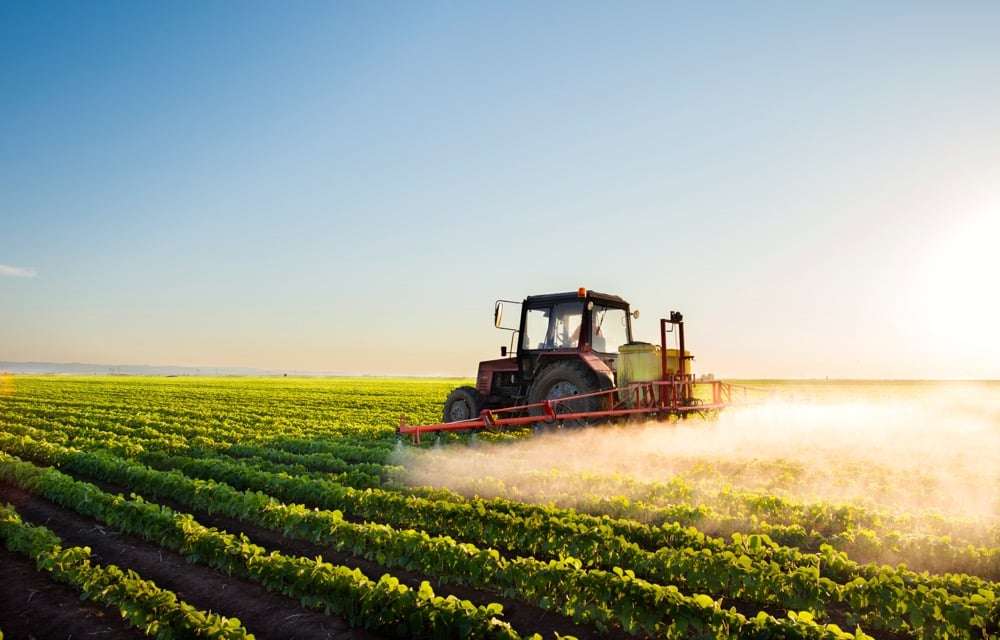
Herbicides are chemicals used to manipulate or control undesirable vegetation. Herbicide application occurs most frequently in row-crop farming, where they are applied before or during planting to maximize crop productivity by minimizing other vegetation. They also may be applied to crops in the fall, to improve harvesting. Herbicides are used in forest management to prepare logged areas for replanting. The total applied volume and area covered is greater but the frequency of application is much less than for farming. In suburban and urban areas, herbicides are applied to lawns, parks, golf courses and other areas. Herbicides are applied to water bodies to control aquatic weeds. These weeds can impede irrigation withdrawals or interfere with recreational and industrial uses of water.
Applied primarily to genetically engineered, glyphosate-resistant varieties of soybeans, corn, canola and cotton. Also applied to control woody plants. Because of its broad spectrum and relatively low toxicity to animals, it is used in horticulture and in the control of aquatic macrophytes.
Applied to control weeds in alfalfa, barley, soybeans and wheat.
Applied to control weeds in small grains, soybeans and corn and in conifer and hardwood plantations.
Applied to crops such as corn, soybeans and sorghum, particularly for conservation tillage.