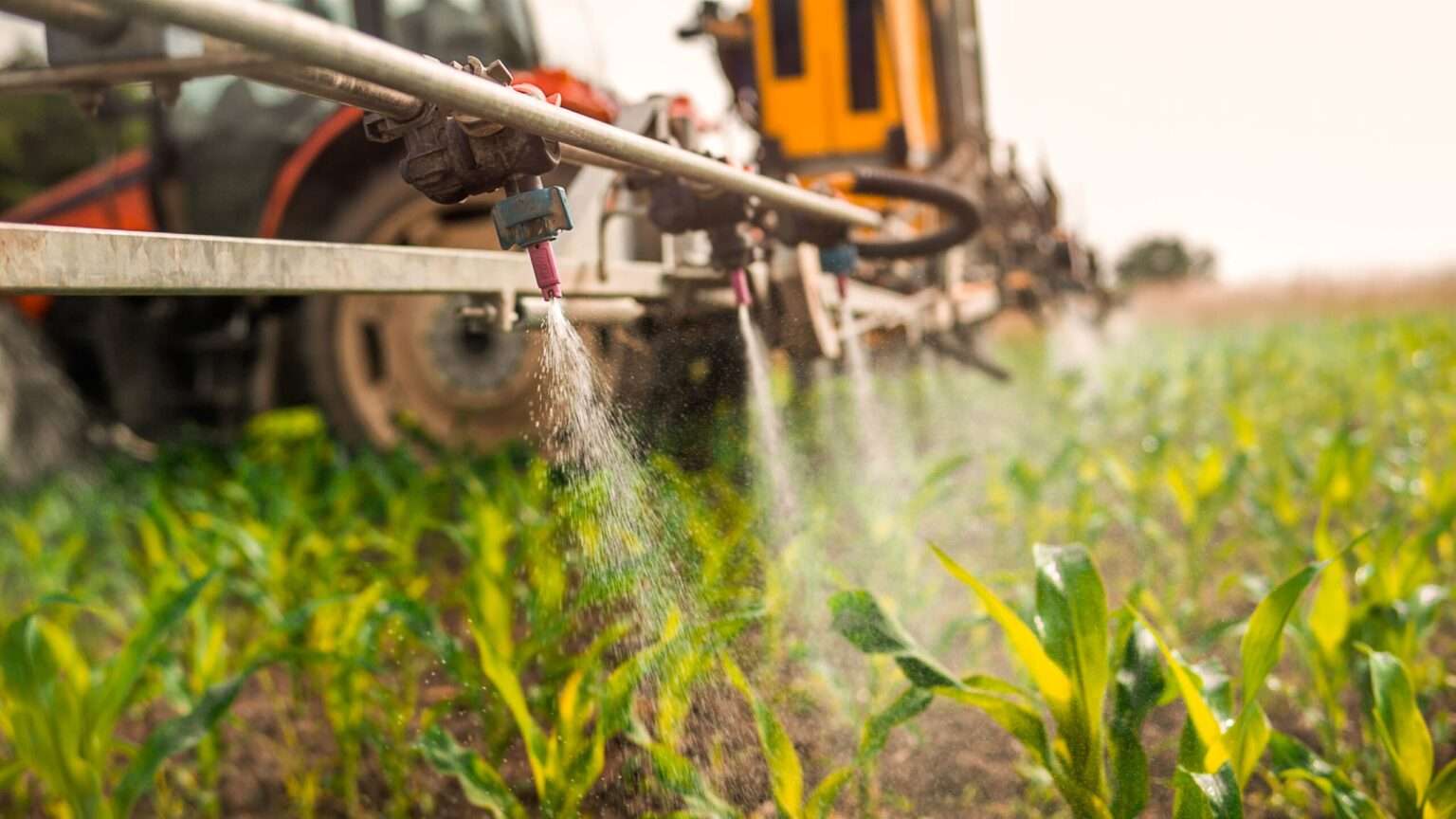
Agricultural spray adjuvants are part of integrated pest management, and during pesticide application are used to enhance the effectiveness of pesticides, herbicides, insecticides, fungicides and other agents that control or eliminate unwanted pests. As with medical adjuvants, agricultural spray adjuvants are not themselves active in controlling or killing pests. Instead, these additives modify some property of the spray solution, which improves the ability of the pesticide to penetrate, target or protect the target organism. Among the typical types of ingredients used are surfactants, emulsifiers, oils and salts. Each of these ingredients, and others, modifies the spray solution itself to improve such properties as spreading, penetration, droplet size or other characteristics.
The molecules on the surface of a water droplet are held together with more force than those of the interior water molecules. This causes surface tension, which can prevent many things from going into solution and getting wet. Surfactants overcome surface tension. Most surfactants have a water-loving polar head (hydrophilic head) and water-hating non-polar tail (hydrophobic tail).
These components of a surfactant molecule help break water surface tension, allowing the pesticide to be more evenly dispersed on a surface and to reach its target. When water molecules come into contact with unlike substances, several things may happen. If the substances have a similar charge, the two forces repel each others. If they have different charges, the two forces will attract each other. If there are no charges, there will be no reaction. Water, when placed on most hydrophobic surfaces, will bead. This beading is caused by surface tension, and this surface tension can be reduced by the addition of surfactants.